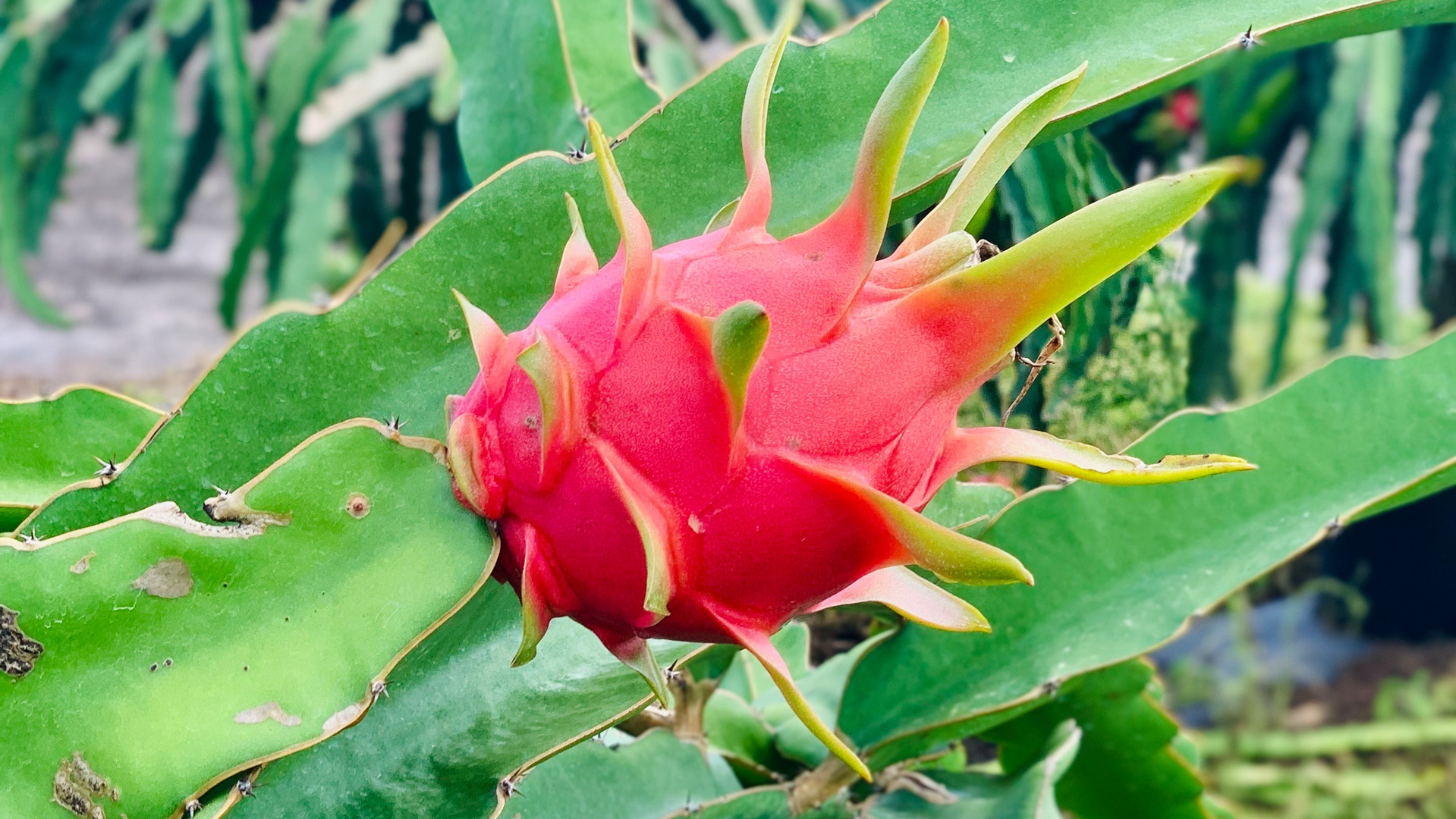
Dragon fruit, also known as pitaya, is one of the most vibrantly beautiful fruits ever to grace our grocery lineup. If you’ve been to Southeast Asia (where they’re popular), Central America (where they originate), or a fancy smoothie shop, then you’ve probably marveled at one before. But dragon fruit is more than just a pretty face. Get to know our newest addition and start brainstorming new smoothie ideas.
A Mind-Blooming Fruit
This vibrant, speckled fruit only blossoms once a month, at night, during a full moon. Unfortunately, this isn’t because werewolves hand-pollinate them. In their natural habitat, several non-supernatural species of bats and moths pollinate them at night. Dragon fruit flowers are huge when fully bloomed, but their petals start to wilt as soon as the sun rises. This makes spotting one in its full glory rarer than finding a perfectly ripe avocado.
Homegrown
Dragon fruit is typically shipped in from Ecuador or Vietnam, but ours is uniquely grown in sunny Florida. That means the supply chain is shorter because our dragon fruit doesn’t need to take the voyage from Ecuador or Vietnam.
The Other Kind of Super Fruit
Imported foods that don’t have an organic or Fair Trade certification have to be exposed to radiation to kill any unwanted insects that may have tagged along for the trip. But since our dragon fruit is raised in Florida, there’s no need for radiation. This means our dragon fruit is fresher and less likely to become a Marvel supervillain.
Ok, but how do I eat it?
It seems like a pity to toss your pitaya in a blender like it’s some common counter banana. But the bright white, deep magenta, or velvety red hues make for an eye-catching and delightful smoothie bowl. If you’re a purist, you can cut your dragon fruit in half and scoop out the fruit with a spoon like you would a kiwi or an avocado. But scoop with care so you can use the outsides to make dragon fruit shrimp salad boats. Using the husk, rind, or shell of your favorite foods is a less wasteful way to make something easy look fancy – and hey, no dishes!